


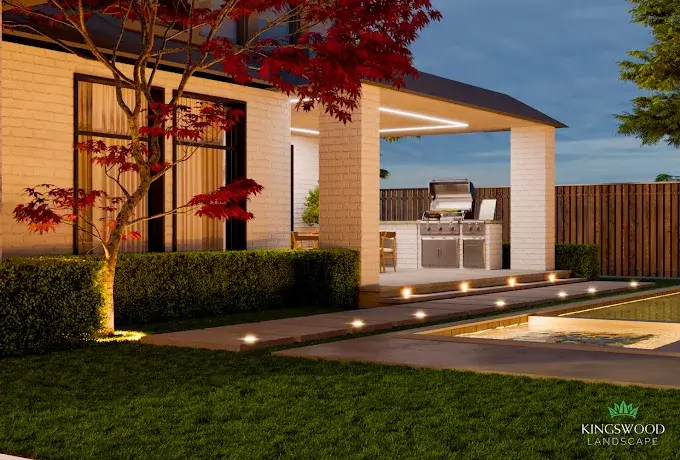
Fewer lights, warmer color, better placement.
Thanksgiving is nine days away, and in Dallas the Friday after is when the ladders come out. By Sunday evening half the street is lit, and much of it looks alike: cool white icicles along the gutters, every shrub buried under a net of LEDs. The purchasing happens this week, while the shelves are still full.
The homes that make you slow down are lit with less, lit warm, and lit where it matters. This is a plan for temporary holiday lighting, hung in November and taken down in January: the color to choose, what to light and what to leave dark, how to layer it, how to keep it safe, and a setup completed in a single evening.
Color temperature does more for a display than quantity ever will.
Read the box before you buy · "Warm white" and 2700K
Light color is measured in kelvins. Around 2700K is the warm, golden white of candlelight and an old incandescent bulb. Around 5000K and above is the bluish "cool white" of a parking lot. Warm white flatters brick, limestone and stucco, keeps greenery rich rather than grey, and matches the landscape lighting most well-designed homes already use.
Choose one color temperature and hold to it across the entire house. Mixing warm and cool strands is the quickest way to make a display look accidental. If you love color, confine it to one element, such as a single tree in all red.
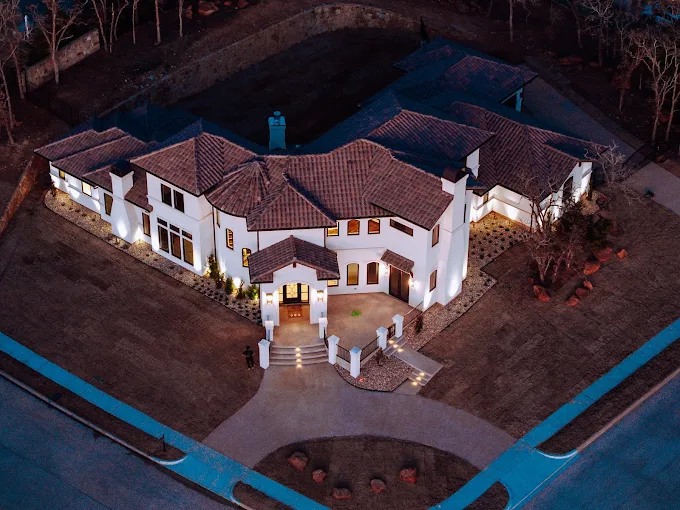
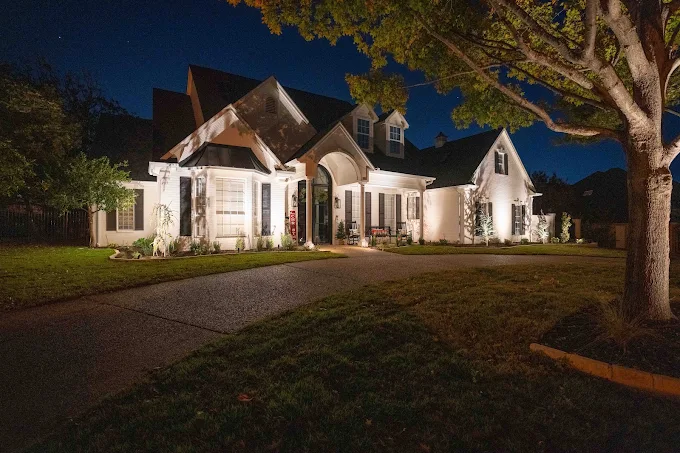
Light the architecture and one or two exceptional features. Let the rest fall into shadow.
One or two trees. A specimen live oak, a red oak or a crape myrtle near the entry. One beautifully lit tree is worth more than ten wrapped shrubs.
The front entry. Garland with warm lights around the door, a lantern on each side, pots dressed in greenery.
The path to the door. Guests should see every step. Lanterns on the steps or a run of warm string lights along a low hedge does it without stakes in the lawn.
One architectural line. A roofline over the entry, a porch beam or a gable — not every gutter on the house.
Netting over every shrub in the foundation bed.
Lights on every gutter and window at once.
Blinking, chasing or color-changing modes.
In the side yard no one walks.
Good lighting has a foreground, a middle ground and a background.
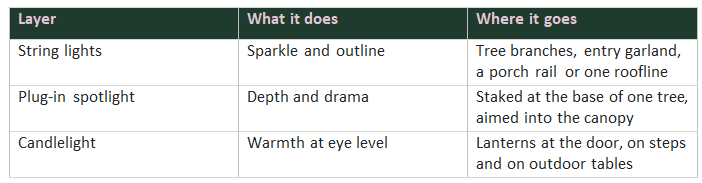
When wrapping a tree, wrap the trunk and main limbs tightly and evenly, spacing rows about the width of your hand. On a large live oak, light the trunk and the first major limbs and let a spotlight carry the canopy. Wrap loosely enough that nothing cuts into bark, and remove the lights by mid-January so limbs are not girdled as they grow.
For the spotlight, a plug-in outdoor spotlight with a warm-white bulb and a ground stake is all that is required. Set it 2 to 3 feet from the trunk and aim it up through the branches, not at the house.
For lanterns, battery candles with a built-in timer are the easiest to live with. Real candles are lovely on a table where you are seated; never leave them unattended near dry leaves or greenery.
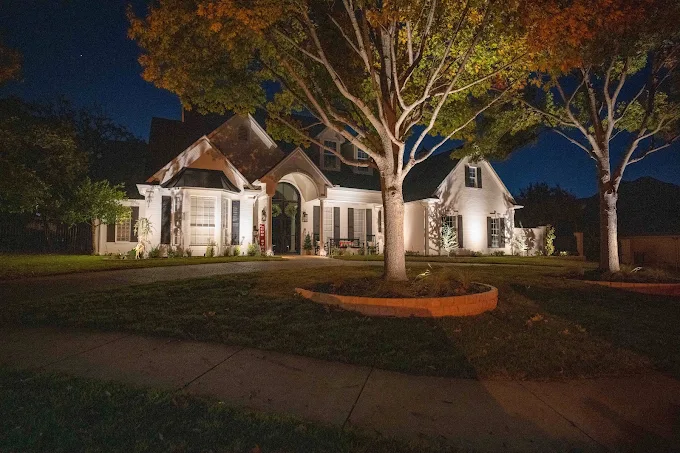
Light the tree, not the sky. A spotlight should be aimed into the canopy and shielded so the beam ends at the leaves rather than shooting past them into the night. The tree should glow; the fixture should disappear. It is the first rule of our permanent lighting designs, and it serves a December display just as well: if a bare bulb or a beam is visible from the street, it is pointed wrong.
The unglamorous part, and the part that keeps the display running through New Year's.
Check the label on every cord
Set once, untouched until January
An outdoor timer or an outdoor-rated smart plug turns everything on at dusk and off at bedtime. In December the sun sets in DFW around 5:20 to 5:30 p.m., so lights come on just before and go off around 11 p.m. Many timers can follow sunset automatically. Group circuits by zone — tree, entry, roofline — so each can be adjusted on its own.
Begin in daylight, finish after dark so you can judge it.
About four hours with two people
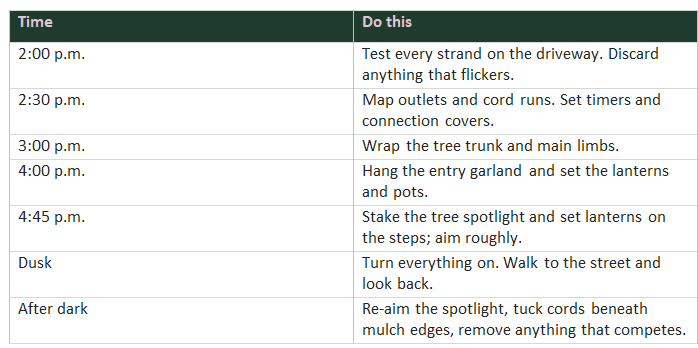
The final step is the one most often skipped. Stand at the curb, then across the street. Whatever the eye finds first should be the tree or the door.
Holiday lights come down in January, and the extension cords return to the garage. A landscape lighting design remains: uplit trees, softly lit steps, a lit entry and warm terrace light, on every night of the year with no ladder involved. If you would like your home to look as composed in March as it does on Christmas Eve, our design studio would welcome the chance to plan a lighting design for your property alongside the landscape around it. Start a conversation with Kingswood Landscape.


