


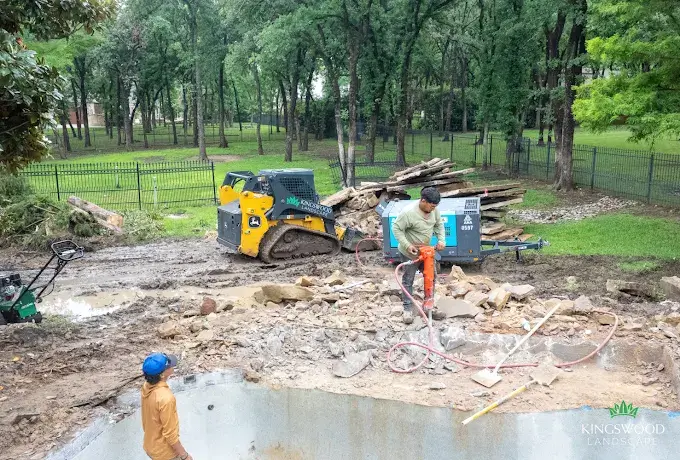
When to design, when to break ground, and how to work backward from the first swim.
The short answer: begin in fall or early winter. Design and permitting unfold while the weather is mild and calendars are open, construction carries through winter and early spring, and the water is ready before the summer heat arrives.
Late October is when that window opens. Wait for the first 100-degree week to call a builder, and the likely sequence is design in summer, construction through fall, and a first swim the following year. Here is how each season plays out in North Texas, and how we would plan around it.
The best months to build are the months when no one is swimming.
Swim-ready: spring, before the heat
Mild, generally drier weather, and builder and permit schedules open after the summer rush. Holiday weeks slow inspections slightly, but this is the season that puts you in the water first.
Swim-ready: late spring to early summer
Cool, workable days; excavation and steel move well. Hard freezes can pause concrete and plaster for a few days at a time.
Swim-ready: mid to late summer
Everyone wants a pool by summer, so calendars fill quickly. Spring storms can halt excavation for days and leave the dig saturated.
Swim-ready: fall, after most of the season
Long days, but crews begin early to stay ahead of the heat, and 100°F afternoons affect plaster and concrete timing. It is also the season of peak demand.
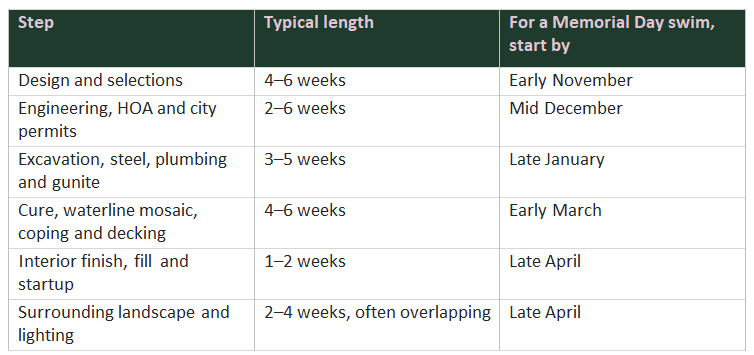
Choose the day you want to be in the water, then count back. These are typical ranges for a custom gunite pool; your design, city and weather will move them.
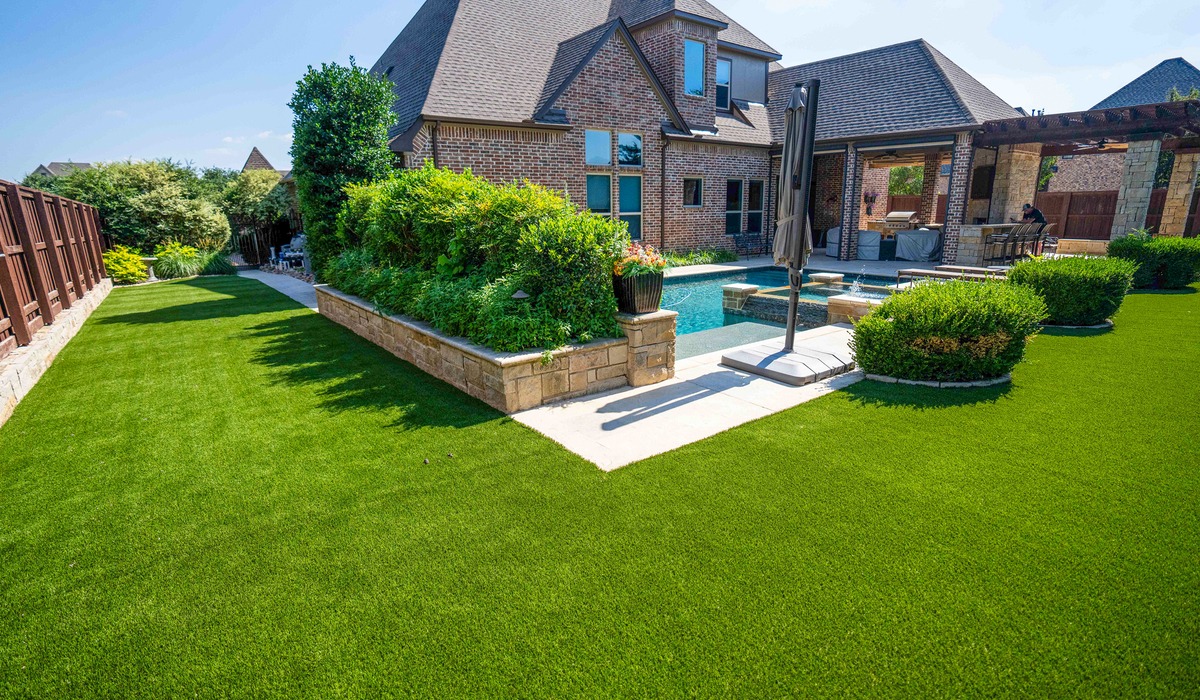
A spa, a covered structure or an outdoor kitchen adds time. Planning them together, rather than adding them later, means the yard is opened only once.
The season matters, but these five factors matter as much.
Permits. Every city in the Metroplex runs its own review, and timing differs from Southlake to Dallas to Fort Worth. Ask your builder how long your city has taken recently.
HOA approval. Many neighborhoods require architectural review before a permit is submitted. Request the guidelines early; a monthly committee meeting can add weeks.
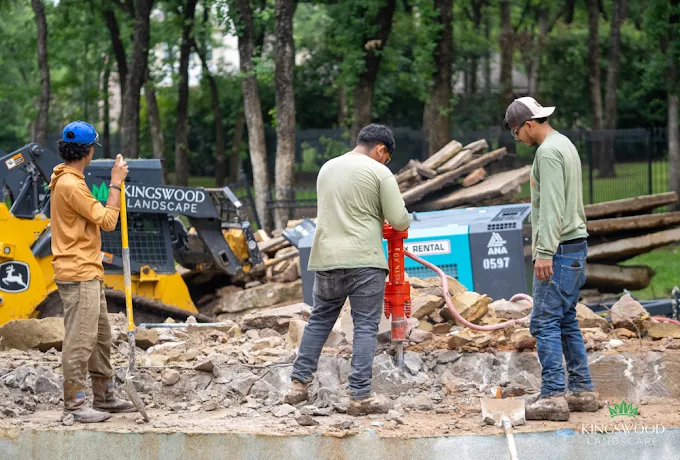
Our clay soil. North Texas expansive clay swells when wet and shrinks when dry. A well-built pool is engineered for it, with beams, decks and coping detailed to stay true through those cycles. That step should never be shortened to save time.
Rain. A wet spring can stop excavation for days at a time. Starting earlier gives the schedule room to absorb it.
Selections and access. Special-order mosaic, stone or equipment can carry lead times, and narrow side yards or retaining walls change how equipment reaches the back. Decide finishes during design, not mid-build.
The pool is never the first line we draw. We begin with where people will sit, where the afternoon sun falls and what the view from the kitchen window should be, then place the water to serve all three. A pool designed on its own tends to look dropped into the yard. A pool designed with the terrace, the shade and the planting looks as though it was always meant to be there.
Every decision settled on paper is one that cannot slow the build.
The weeks of design are where a fall start earns its advantage. These are the choices we settle before anything is excavated:
Shape and placement. Geometric or softened, centered on the house or set off to one side, and how far from the back door. Placement determines how the pool reads from inside the home, which is where it is seen most, in every season and long after the swimming ends.
Depth. A uniform shallow depth suits lounging and games; a deeper end suits divers and lap swimmers. The choice affects excavation, engineering and the finished feel.
Spa and water features. A raised spa, a sheer descent or a scupper changes plumbing, equipment and the structure of the beam. They belong in the first drawing, not the last.
Interior finish and waterline. The finish sets the color of the water; the waterline mosaic is the detail people notice up close.
Coping and decking. Natural stone or porcelain, the joint pattern and how the deck meets the lawn and beds. In Texas sun, a lighter, cooler surface is noticeably kinder underfoot in July.
Equipment location. Pumps and filters need access and a quiet place to sit, out of sight from the terrace and away from bedroom windows.
Lighting. In-pool light, path light and the trees beyond, designed together so the yard reads well after dark.
Considering a pool for next summer? This is the moment to begin. Our design studio plans the pool, the decking, the shade and the planting as one composition, so the entire backyard is finished together and built to the standard it deserves. Start a conversation with Kingswood Landscape.


